⭐ 5-Star Rated UK Studio | ⚡ Same-Day Dispatch on Eligible Orders | 🚚 Free UK Delivery over £20
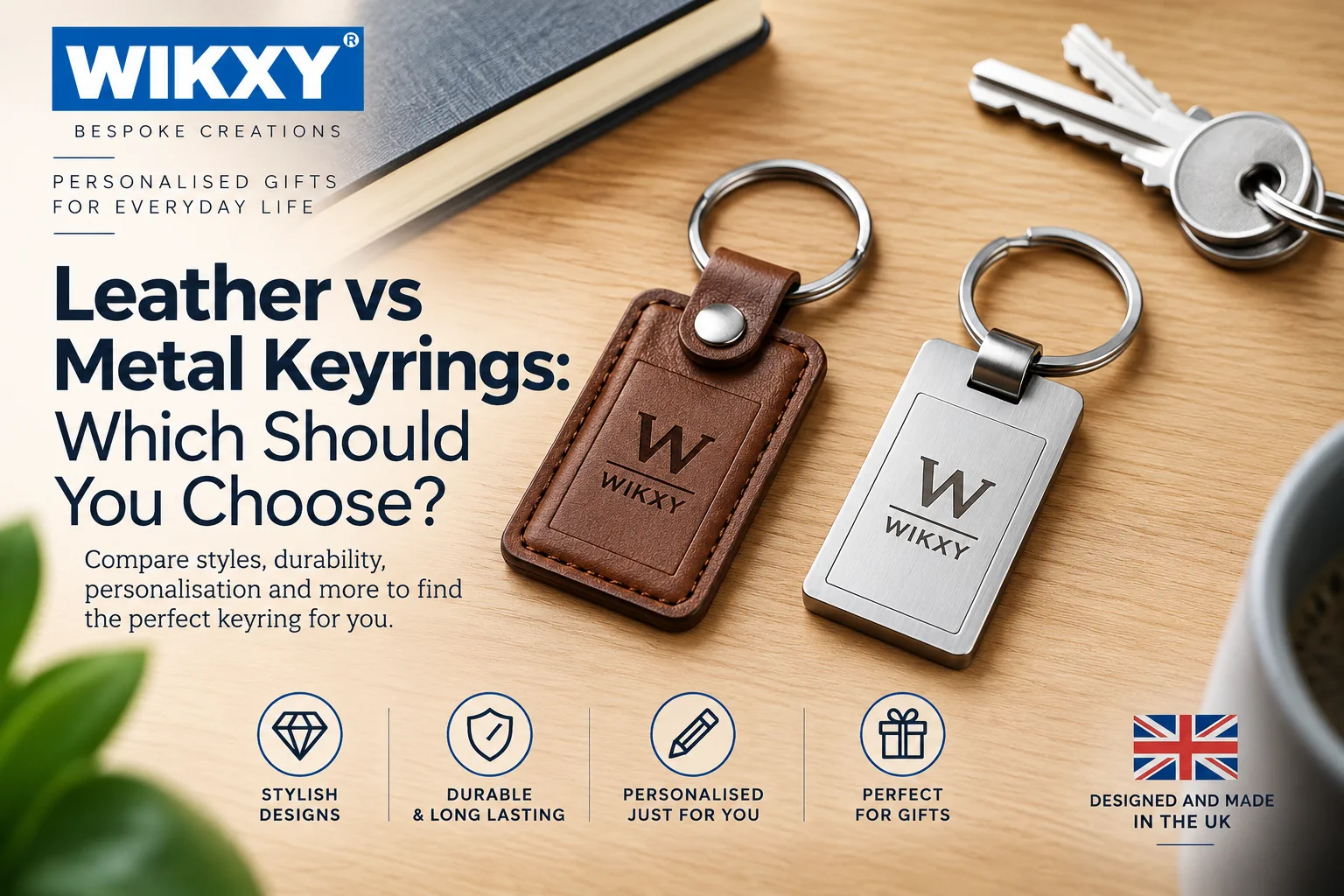
Leather vs Metal Keyrings: Which Is Right Advice for You?
Compare leather and metal keyrings for durability, engraving, style and gifting, so you can choose the right personalised keyring.

Choosing a keyring sounds simple until you start comparing materials. Leather and metal are both popular choices, but they suit different uses, styles and budgets. The right option depends on who will carry it, how often it will be used and what kind of personalisation you have in mind.
In the leather vs metal keyrings debate, neither material wins in every situation. A leather keyring can feel warm, traditional and understated, while a metal keyring often brings a cleaner, more robust and contemporary finish. This guide compares the practical differences to help you make a confident choice for a gift, a personal accessory or a business-related item.
At a glance: Leather vs Metal Keyrings?
If you need a quick starting point, think about the intended feel as well as the intended use.
- Choose leather for a softer, classic look; a lighter feel in the pocket; and a gift that can develop character through everyday use.
- Choose metal for a substantial, durable feel; crisp engraved detail; and a more modern or professional appearance.
- Consider the recipient’s routine: a keyring used on a busy set of house, car and work keys needs different qualities from one attached to a bag or kept as a keepsake.
Both can make thoughtful personalised gifts. The decision becomes easier when you look at durability, maintenance, personalisation and the style you want to achieve.
Leather vs Metal Keyrings: character, comfort and classic style
Leather has long been used for everyday accessories because it feels comfortable to handle and sits naturally alongside bags, wallets and belts. It is a good choice when the design needs to feel personal rather than overly formal.
How Leather vs Metal Keyrings wears over time
One of leather’s defining features is that it changes with use. Depending on the finish and care it receives, it may soften and develop a patina. Many people like this lived-in appearance: a leather keyring can start out neat and smart, then become more individual as it is carried.
That said, leather is not maintenance-free. Repeated exposure to rain, damp pockets, oils or harsh cleaning products can affect its surface. A leather keyring is usually best for someone who appreciates natural materials and does not expect it to look factory-new forever.
Leather vs Metal Keyrings: Comfort and practicality
A leather fob is generally quiet and comfortable in a pocket. It is less likely than a solid metal piece to knock against a phone or make a noticeable clinking sound when attached to a small set of keys. This can make it appealing for daily home or car keys.
The trade-off is that leather can be marked by sharp objects and may not suit particularly demanding environments. If keys are regularly exposed to mud, workshop dust, rain or hard knocks, metal may be the more straightforward choice.
Personalisation on Leather vs Metal Keyrings
Leather works especially well for simple, considered personalisation. Initials, a short name, a date or a brief message tend to suit the material’s understated character. Before settling on a design, consider how much text is genuinely useful: small accessories rarely benefit from long wording.
High-contrast graphics and very fine artwork may be better suited to another material or a larger product. A clear layout with enough empty space will usually look more refined than trying to fit every detail onto a small leather tag.
When leather is the better choice
- Milestone gifts, such as a new-home, birthday or anniversary present
- Traditional or heritage-inspired styling
- Simple initials, names and short messages
- Recipients who prefer warm, natural-looking accessories
- Smaller key sets where a quiet, lightweight fob is useful
Leather vs Metal Keyrings: durability, definition and a polished finish
Metal keyrings are valued for their weight, resilience and clean visual impact. They can feel more substantial in the hand and are often chosen for designs that need sharp lines, clear lettering or a more formal finish.
Strength for everyday use Leather vs Metal Keyrings
For a keyring that will be handled frequently, metal is a practical contender. It is less vulnerable to damp conditions than leather and is generally easier to wipe clean. A well-chosen metal design can stand up to the knocks and scrapes that come with keys being dropped into bags, placed on worktops or carried every day.
However, metal is not completely immune to wear. The surface can pick up fine scratches, particularly when several keys or other items rub against it. Some people see this as normal everyday wear; others may prefer a finish that disguises minor marks more readily.
Engraving detail and legibility: Leather vs Metal Keyrings
Metal is often the stronger option where the design relies on precise linework. Names, dates, coordinates, a small symbol or a simplified logo-style graphic can look crisp when there is enough contrast and the artwork has been prepared properly. It is also a sensible material for a straightforward message that needs to remain easy to read with regular handling.
Good personalisation is not only about the material. Font choice, available engraving area, text length and the complexity of any artwork all matter. A short, well-spaced inscription will usually be more effective than a dense design, whatever metal is selected.
Weight and pocket feel
Metal can be noticeably heavier than leather. For some recipients, that extra weight feels premium and reassuring. For others, especially those who keep keys in a trouser pocket or carry a large bunch, it may be less convenient.
Think about the existing keys too. A single car fob and one house key can comfortably take a more substantial keyring. A crowded ring containing work keys, access fobs and several tags may benefit from something compact and light.
When metal is the better choice
- Daily-use keyrings that may encounter rain, dirt or frequent handling
- Modern, industrial or minimalist designs
- Engraved artwork with clean lines and clear text
- Professional, team or event-related gifting where a consistent look matters
- Recipients who prefer a weightier, more polished accessory
Leather vs metal keyrings: the practical comparison
There is no need to choose based on appearance alone. Use the following points to weigh up which material suits the purpose of the keyring.
Durability
Metal is usually the more resilient choice for wet conditions and hard everyday use. Leather can last well when cared for, but it is more susceptible to moisture, staining and scuffs. If the keyring is likely to be treated roughly, metal has the practical edge.
Appearance
Leather tends to look relaxed, traditional and tactile. It complements a personal message or a classic gift. Metal feels neater, sharper and more contemporary, making it well suited to minimal designs and a professional setting.
Personalisation
Both materials can be personalised effectively, but the design should match the surface. Leather suits concise wording and uncomplicated layouts. Metal is often a stronger fit for precise lettering and simplified graphic detail. In either case, avoid treating the available space like a noticeboard: fewer, better-chosen details normally create the best result.
Care
Metal is generally easier to clean with a soft cloth and requires little ongoing attention. Leather benefits from being kept dry where possible and treated gently. If low maintenance is a priority, metal is usually simpler.
Cost considerations
Prices vary according to size, material grade, hardware, finishing method and the complexity of the personalisation. Rather than assuming one is always cheaper, compare the finished item you are considering. A small difference in price may be worthwhile if the material better fits how the recipient will use it.
How to choose the right keyring for a gift
A personalised keyring can be a small gift with real everyday value, particularly when the wording has a clear connection to the recipient. Before deciding on leather or metal, ask a few practical questions.
- What are they likely to attach it to? Car keys, house keys, a bag or a work lanyard all create different demands.
- What is their usual style? Look at the accessories they already use. A person with leather shoes and a traditional watch may favour leather, while someone who prefers clean, modern accessories may prefer metal.
- How much text is needed? Keep it meaningful and concise. Initials, a date, a house number or a short phrase often work better than a lengthy message.
- Will it be used outdoors or at work? Choose a material that suits the likely environment rather than only the presentation on the day it is given.
- Is it primarily practical or sentimental? For a keepsake, feel and appearance may lead the decision. For a heavily used item, durability may matter more.
Design tips for a personalised keyring
Material is only one part of a successful design. These simple choices can help ensure the finished keyring remains useful and attractive.
- Prioritise readability. Select a clear typeface and do not make text unnecessarily small.
- Keep messages short. A name, initials, date or a few words are easier to read and more likely to age well.
- Use meaningful information. A special date, a postcode reference, coordinates or a private in-joke can make a modest design feel considered.
- Check spelling and dates carefully. Personalised items are not the place to rely on a quick final glance.
- Match the design to the recipient. A clean monogram can feel right for one person; a playful icon may be perfect for another.
Frequently asked questions
Are metal keyrings better than leather keyrings?
Not in every case. Metal is generally better for resilience, low-maintenance care and crisp detail. Leather is often better for a softer, classic feel and a gift with natural character. The best option depends on the recipient and how the keyring will be used.
Do leather keyrings last?
Leather can last well with sensible care, but it will naturally show use over time. Keeping it away from prolonged moisture and harsh cleaners will help preserve its appearance.
Which material is best for an engraved keyring?
Metal is often a good choice for sharp text and fine, simplified artwork. Leather can work beautifully for initials and short messages. Consider the amount of detail you need before choosing.
Is a metal keyring too heavy for everyday keys?
It depends on its size and the rest of the key set. A compact metal keyring may be perfectly comfortable, while a larger, heavier one can be less convenient when paired with multiple keys and fobs.
Making your final choice
When comparing leather vs metal keyrings, start with the recipient’s routine rather than the material alone. Choose leather for warmth, comfort and a timeless gift feel. Choose metal for hard-wearing practicality, clear detail and a more contemporary finish.
If you are planning a custom engraving project and want to make the design as useful as it is personal, WIKXY can help you consider the wording, layout and material choices before you commit.