⭐ 5-Star Rated UK Studio | ⚡ Same-Day Dispatch on Eligible Orders | 🚚 Free UK Delivery over £20

How to Care for Engraved Leather: A Practical Guide
Learn how to care for engraved leather with practical cleaning, conditioning, stain removal and storage tips to keep personalised pieces looking their best.

Engraved leather has a character that improves with sensible use and care. Whether it is a personalised accessory, a keepsake or a branded item, the engraved detail is part of what makes it special. Looking after it well helps the leather remain supple while keeping the design clear and attractive.
The best approach is usually gentle and uncomplicated: remove surface dust, deal with spills promptly, condition sparingly and avoid extremes of heat and moisture. However, leather is not one uniform material. A treatment that suits a smooth, full-grain surface may be unsuitable for suede, nubuck or leather with a painted finish. Before using any product, check the maker’s care instructions and test it in a small, hidden area.
Why engraved leather needs considered care
Leather is a natural material with fibres and oils that can change over time. Regular handling, dry indoor air, sunlight, rain and accidental spills can all affect its colour, texture and flexibility. Engraving adds another consideration: the design may sit in recessed lines or have a darker, lighter or textured appearance than the surrounding surface.
Dust and product residue can collect in fine engraved details. Too much conditioner, wax or oil can also deepen the leather’s colour and alter the contrast of the engraving. That does not mean engraved leather is difficult to maintain; it simply means a light touch is preferable to frequent, heavy treatment.
How to care for engraved leather day to day
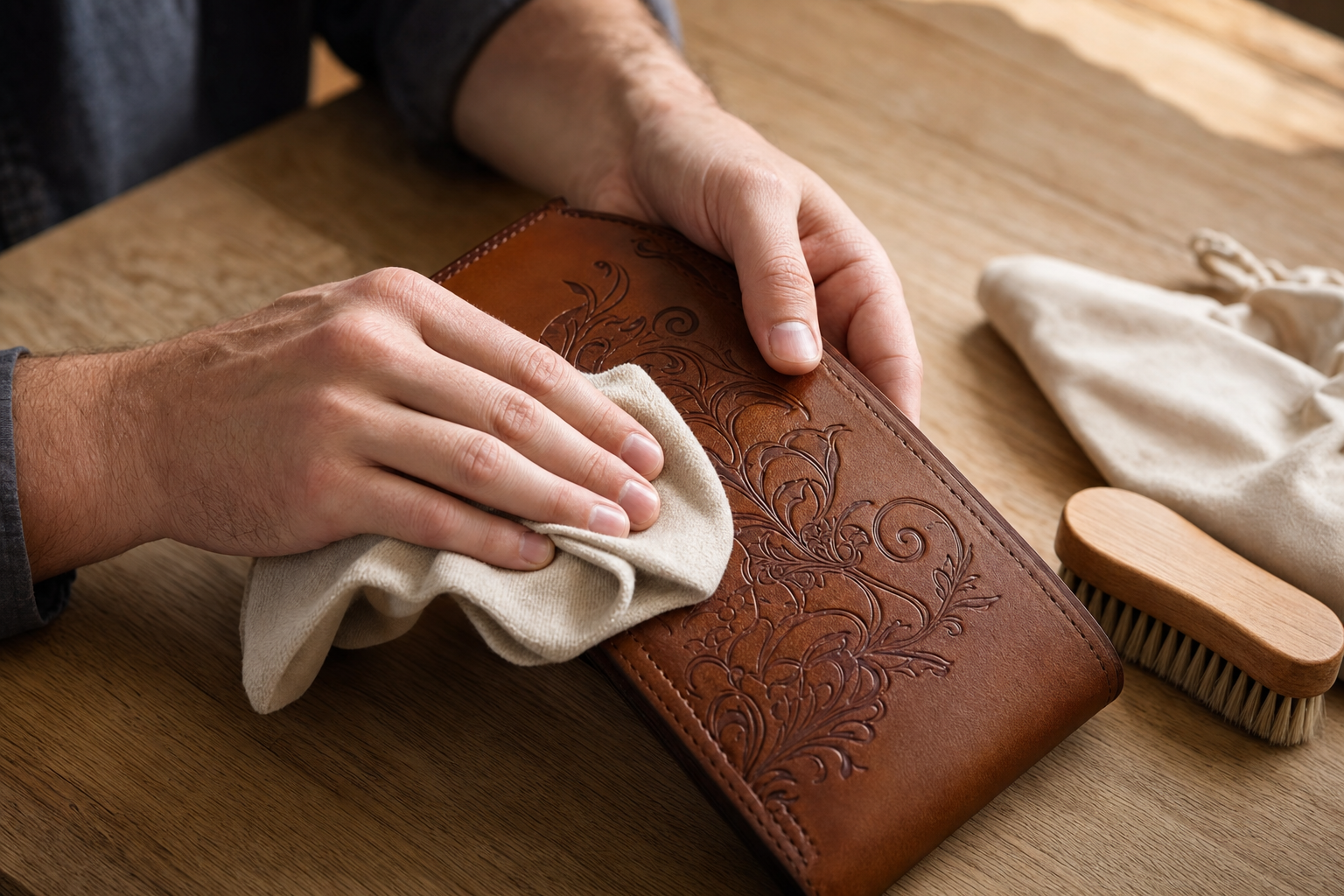
For most smooth leather items, a quick dry clean is all that is needed between deeper cleans. Use a soft, clean microfibre cloth or a very soft brush to lift away dust. Work gently rather than pressing hard into the design.
Keep it dry, but do not panic over a few drops
If leather gets caught in light rain or splashed with water, blot it immediately with a clean, absorbent cloth. Do not rub, as rubbing can spread the moisture and disturb the surface. Let it dry naturally at room temperature, away from direct heat.
Never place wet leather on a radiator, use a hairdryer or leave it close to a fire. Fast drying can make leather stiff, encourage cracking and sometimes cause uneven marks. If the item needs help keeping its shape while drying, lightly stuff it with plain, unprinted paper. Avoid tightly packing it or using newspaper, as ink may transfer.
Handle it with clean hands
Natural skin oils, hand cream, perfume, food and make-up can gradually leave marks, particularly on pale or unfinished leather. Clean, dry hands are the simplest protection. Try not to place engraved leather directly on greasy kitchen surfaces, damp tables or freshly treated wood.
Protect the engraved area from abrasion
An engraved design is part of the leather surface, so it can be affected by repeated friction. Avoid rubbing it against keys, rough metal fittings, abrasive fabrics or gritty surfaces. Where possible, keep the item in its own pouch or a soft compartment rather than loose in a bag with hard objects.
Cleaning engraved leather safely
When surface dust is not enough, clean only as much as is necessary. Over-cleaning can remove natural oils and leave the leather looking flat or dry.
- Identify the leather first. Smooth finished leather is generally the easiest to wipe clean. Suede and nubuck need specialist care and should not be treated like smooth leather. If you are uncertain, start with dry cleaning only.
- Remove loose dust. Use a soft cloth or soft-bristled brush, paying attention to the engraved lines without scrubbing them.
- Use a barely damp cloth for light marks. Dampen a clean cloth with plain water, then wring it out thoroughly so it is not wet. Wipe the affected area softly and evenly.
- Use a suitable leather cleaner only when needed. Choose a product intended for your particular leather type and follow its label. Apply the cleaner to the cloth rather than directly onto the leather, unless the product instructions say otherwise.
- Let it air-dry fully. Leave the item away from heat and direct sunshine before deciding whether further cleaning is needed.
For fine engraving, a soft, dry artist’s brush can be useful for gently removing dust from recessed details. Avoid stiff brushes, toothpicks, pins or anything that could scratch the leather or catch on delicate edges.
What not to use on engraved leather
Household cleaning products are rarely a good idea on leather. Avoid bleach, disinfectant sprays, washing-up liquid, alcohol-based wipes, hand sanitiser, acetone, baby wipes and general-purpose cleaners. These can strip finishes, leave tide marks or cause discolouration. Oils intended for wood, cooking oils and petroleum-based products should also be avoided unless they are specifically made for the leather in question.
Even a leather product can produce an unexpected result, especially on pale, dyed, aniline or unfinished leather. A discreet patch test remains important.
Conditioning leather without obscuring the engraving
Conditioner helps replenish moisture in smooth leather that is beginning to feel dry or less flexible. It is not something every item needs on a fixed schedule. Instead, look at and feel the leather. If it is soft, supple and in good condition, leave it alone. If it looks dry, feels stiff or is developing fine surface dryness, a small amount of appropriate conditioner may help.
Apply conditioner sparingly with a soft cloth, using a thin, even layer. Do not pour it onto the item, and do not saturate the engraved section. Work across the whole panel rather than treating only one small spot, which can create uneven colour. Allow it to absorb according to the product directions, then gently buff away any excess with a clean cloth.
Bear in mind that conditioning can temporarily darken leather and may permanently deepen the shade on some finishes. It can also soften the contrast between the engraving and the surrounding leather. Test first, use very little, and avoid repeated applications simply to create a shine. Leather that is glossy because it is coated in product is not necessarily better protected.
Dealing with common marks and spills
Prompt, gentle action gives you the best chance of avoiding a lasting mark. The aim is to lift or absorb the spill, not force it deeper into the leather.
Water marks
Blot fresh water immediately and let the leather dry slowly. A water mark can sometimes form when one small area becomes wet. On suitable smooth leather, lightly and evenly wiping the surrounding panel with a barely damp cloth may reduce a hard edge, but this should only be attempted after testing in a hidden spot. For valuable pieces or noticeable marks, professional leather cleaning is the safer route.
Oil and grease
Blot gently with a dry cloth. Do not use water and do not rub. A specialist leather cleaner or professional cleaner may be needed, particularly for large stains. Home remedies such as talc, cornflour or washing-up liquid can leave residue or change the finish, so use caution rather than relying on online shortcuts.
Ink, dye transfer and make-up
These marks are difficult because solvents can damage leather as readily as they remove the stain. Avoid aggressive rubbing and do not reach for nail varnish remover or alcohol. If the item matters to you, seek advice from a professional leather-care service before trying a treatment.
Storing engraved leather properly
Good storage prevents many avoidable problems. Keep leather in a cool, dry place with some airflow. A breathable cotton dust bag is preferable to an airtight plastic bag, which can trap moisture. If no dust bag is available, wrap the item loosely in clean, soft cotton.
Keep it away from prolonged direct sunlight, as ultraviolet light can fade or alter the colour of leather and make engraved contrast less distinct. Avoid damp lofts, sheds and bathrooms, where moisture can encourage mould. Equally, do not store leather beside radiators or in very dry conditions for long periods.
For shaped items, support their form with acid-free tissue paper or plain, unprinted paper. Do not stack heavy objects on top of engraved leather, as pressure can create creases and flatten raised texture around the design.
Special care for different leather finishes
The term “leather” covers many finishes, and the right routine depends on what you have.
- Smooth finished leather: Usually tolerates gentle dry dusting, occasional damp wiping and a compatible conditioner.
- Vegetable-tanned or natural leather: Often develops a deeper patina with use and may darken quickly when conditioned. Use minimal product and test carefully.
- Suede and nubuck: These have a soft, brushed surface and need a suede brush or specialist cleaner. Water, conditioner and standard leather creams can cause damage.
- Coated, painted or metallic leather: Treat gently with a dry cloth or follow the manufacturer’s instructions. Conditioners may affect the coating or finish.
If the engraving sits on a mixed-material item, take care around stitching, metal hardware, painted edges and adhesives too. Cleaning products that are acceptable for one part may not be suitable for another.
When to seek professional help
Professional cleaning or restoration is worth considering for mould, extensive water damage, deep grease stains, ink marks, persistent odours or significant cracking. It is also sensible for treasured engraved pieces where an unsuccessful DIY treatment would be disappointing. Tell the specialist that the item is engraved and describe the leather finish if you know it.
Frequently asked questions
Can I use leather conditioner on engraved leather?
Usually, yes, if the leather is smooth and the conditioner is suitable for that finish. Use a very small amount, test it in an inconspicuous area first and be aware that it may darken the leather or soften the engraving’s contrast.
How often should engraved leather be cleaned?
Dust it when needed and clean marks promptly. A deeper clean or conditioning treatment should be based on the leather’s condition rather than a strict timetable. Too much product can be as unhelpful as too little care.
Will water ruin an engraved leather item?
A few drops or light rain will not automatically ruin it. Blot the moisture, let the item air-dry naturally and keep it away from direct heat. Heavy soaking, however, can lead to marks, stiffness and distortion.
Can I polish over the engraved design?
Use caution. Heavy polish, wax or coloured cream can build up in recessed details and alter their appearance. If polishing is appropriate for the leather, apply it lightly and remove excess from the engraved area with a soft cloth.
Keep the care routine simple
The key to how to care for engraved leather is restraint. Keep it clean and dry, treat spills gently, condition only when the leather needs it and store it away from heat, sunlight and damp. By avoiding harsh cleaners and excessive product, you can help the leather age naturally while the engraved detail remains a clear part of the design.
If you are planning a personalised engraving project and would like to discuss the material or finish, WIKXY can help you explore the practical considerations before making your choice.